
Breast lift (mastopexy)
Breast lift at Ethics, performed to medical standards by a specialist surgeon.
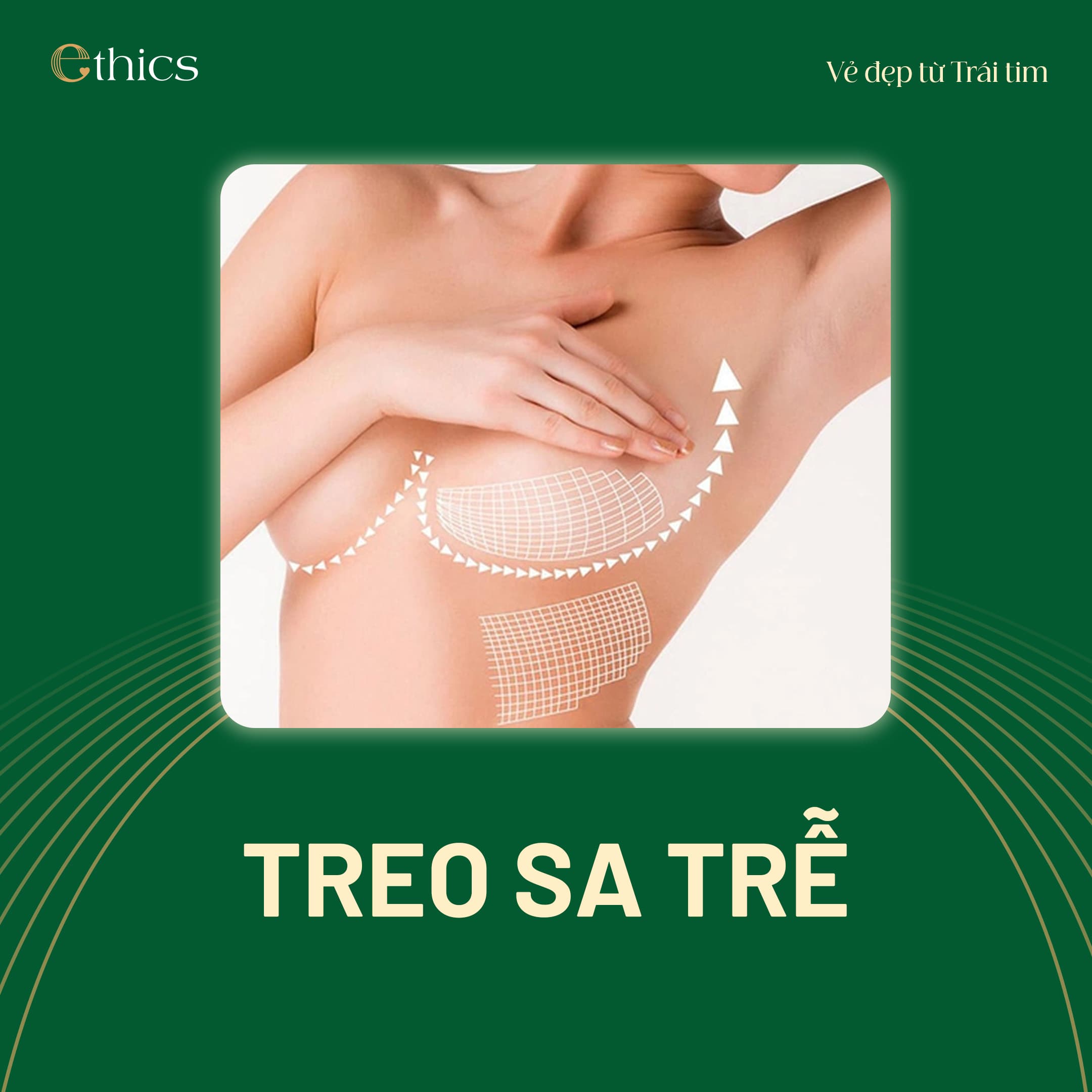
Breast lift and breast augmentation: what is the difference? People often confuse a breast lift with breast augmentation, but they are not the same. So what is a breast lift? Let Ethics Aesthetic Clinic explain in more detail in the article below.
WHAT IS A BREAST LIFT?
A breast lift is a procedure that lifts sagging breasts. It acts directly on the breast to improve drooping and support the breast in its correct position.
For women who have sagging breasts after childbirth or from ageing, this method can be used to lift the breasts and increase their size so they suit the body's proportions.
Results after a breast lift at EthicsHOW MANY DEGREES OF SAGGING ARE THERE?
Sagging is divided into 4 degrees, and for each degree the doctors will recommend different approaches to treat it. Below are the 4 degrees of sagging that you can identify for yourself.
Grade 1: Mild sagging
Breasts at grade 1 begin to show signs of sagging, when the nipple has moved down below the horizontal line through the breast fold by 1 to 3 cm. This is a mild degree of drooping, mainly caused by factors such as ageing, pregnancy or weight change. Although the breast has shifted slightly, it still retains harmony and aesthetic appeal. Intervention at this stage may be the best option to prevent more severe sagging.Grade 2: Moderate sagging
At grade 2, the nipple sits below the horizontal line through the breast fold by 3 to 5 cm. This is a moderate degree of sagging, with clearer signs of drooping. At this point the breast has begun to lose its firm, rounded shape, and the supporting tissues inside have weakened. At this level, aesthetic interventions may include either a breast lift or breast augmentation surgery.Grade 3: Severe sagging
Breasts at grade 3 are identified when the nipple has dropped below the horizontal line through the breast fold by 5 to 10 cm. Drooping at this level is quite serious, and the breast tends to sag, losing elasticity and its ability to support itself. A breast lift, or a breast lift combined with implants, is generally recommended to correct this condition.Grade 4: Very severe sagging
At grade 4, the breast has very severe sagging, with the nipple more than 10 cm below the horizontal line through the breast fold, or the nipple pointing downward. This is a serious condition in which the breast has dropped completely. Surgeons often propose an anchor (inverted T) incision to return the breast to its original position and shape. Grade 3 breast lift combined with implantsMETHODS USED FOR EACH DEGREE OF SAGGING
Each degree is treated with different techniques. The following are the techniques suited to the 4 degrees of breast sagging.
For grade 1 sagging: The doctor makes a curved incision around the areola. A small amount of excess fatty tissue is then removed, and finally the skin around the areola is closed with sutures.
For grade 2 sagging: A curved incision is also made around the areola. Grade 2 differs from grade 1 in that excess skin is cut away and excess glandular tissue inside the breast is removed, after which the glandular tissue is reshaped for better balance.
For grade 3 sagging: The doctor makes an additional vertical incision running from the areola down to the underside of the breast. To remove a considerable amount of fat, glandular tissue and excess skin, and to reshape the glandular tissue, so the breast is tightened and lifted higher.
Grade 4 sagging: An anchor (inverted T) incision is used, and this incision is reserved only for severe sagging. After removing excess fat, glandular tissue and sagging areas of skin, the surgeon fixes the tissue in place with sutures to lift the breast.
Breast lift combined with breast implants: This is an optimal method that helps the patient achieve a firm, shapely bust after surgery. Specifically, this approach combines a breast lift, depending on the degree of sagging, with implants placed to create a feminine, attractive bust.WHO IS SUITABLE FOR A BREAST LIFT
- Women whose breasts have sagged or shrunk with age.
- Mothers who gave birth more than 1 year ago.
- People born with sagging, "double-mountain" breasts.
POST-OPERATIVE CARE
Stage 1: (Day 1 – Day 2)
Because surgery has only just been completed, tightness and discomfort are still present during this stage. The patient will be cared for and rest in the recovery room so that doctors and nurses can monitor the condition and provide timely support.
Note:
If recovery is good, around day 2 the patient may be cleared by the doctor to leave hospital and continue resting at home.
The patient should travel by private car or taxi to ensure a smooth ride and avoid knocks that could harm the breasts. At this stage the breasts are not yet fully settled and can easily shift out of position if any strong impact occurs.
Stage 2: (Day 3 - 10: clean the incision twice a day with normal saline and Betadine)
- Avoid water spinach, chicken, beef, glutinous rice foods, seafood and stimulants for 1 month.
- Walk and move about gently.
- Wear a supportive garment day and night.
- If you have pain or discomfort, you may take oral pain relief medication.
- Always sleep lying flat on your back, not on your side.
- Avoid sexual intercourse for 4 weeks.
Results for a patient who had a breast lift combined with implants at EthicsBecause a breast lift is an invasive procedure involving surgical instruments and incisions made directly in the breast, it requires the surgeon's skill and high precision to avoid affecting the sensory nerves of the nipple and to avoid leaving poor scarring. For this reason, patients should consider choosing a reputable clinic to have the procedure performed.
The information on this website is for general reference and does not replace a consultation with a doctor. Results and recovery differ from person to person. Pages are translated from the Vietnamese originals.
Ask about this service
Leave your name and phone number with the country code. Our team will contact you to answer your questions and arrange a consultation.